ISACA · Exam guide
AAISM Exam Guide
ISACA AAISM (Advanced in AI Security Management) tests whether an experienced security manager can govern, risk-assess and secure AI systems across the organisation. The exam has 90 multiple-choice questions in 2.5 hours across three domains, AI Governance and Program Management (31%), AI Risk Management (31%) and AI Technologies and Controls (38%), and only holders of an active CISM or CISSP can earn the credential.
Updated October 27, 2026 · Exam information verified October 27, 2026 against official ISACA sources
Who the AAISM is for
- CISM holders who want to extend their security management practice to AI systems
- CISSP holders responsible for AI security architecture, controls or assurance
- Security and risk leaders who assess, implement and maintain AI systems in their organisation
AAISM exam facts
ISACA Advanced in AI Security Management (AAISM) (ISACA)
- Exam provider
- ISACA
- Format
- Multiple choice
- Questions
- 90 multiple-choice questions
- Duration
- 2.5 hours (150 minutes)
- Delivery
- Administered through PSI: remotely proctored online or at an approved test centre (test centre only in India, Mainland China and Hong Kong)
- Prerequisites
- An active CISM or CISSP. After passing: a one-time US$50 application processing fee and an application within five years of passing the exam. Maintenance: at least 10 CPE hours relevant to AAISM each year and 30 over the three-year cycle, an annual maintenance fee (US$20 for ISACA members, US$35 for non-members) and proof of an active CISM or CISSP.
Exam information last verified: October 27, 2026
- ISACA: Get AAISM certified (opens in a new tab)
- ISACA: Maintain AAISM certification (opens in a new tab)
- ISACA Now blog: AAISM FAQs (opens in a new tab)
- ISACA press release: AAISM launch (2025) (opens in a new tab)
- ISACA Madrid Chapter: AAISM certification (questions, duration, domain weights, delivery) (opens in a new tab)
- ISACA Engage: AAISM beta exam (150 minutes, PSI scheduling) (opens in a new tab)
- ISACA: AAISM exam content outline (opens in a new tab)
- ISACA: Exam candidate guides (opens in a new tab)
Exam details can change. Always confirm them with the official provider before you book.
The 3 exam domains
Domains and objectives as published in the official ISACA exam outline, with their official weighting.
Domain 1AI Governance and Program Management31%
- Stakeholder considerations, industry frameworks, and regulatory requirements
- AI-related strategies, policies, and procedures
- AI asset and data life cycle management
- AI security program development and management
- Business continuity and incident response
Domain 2AI Risk Management31%
- AI risk assessment, thresholds, and treatment
- AI threat and vulnerability management
- AI vendor and supply chain management
Domain 3AI Technologies and Controls38%
- AI security architecture and design
- AI life cycle (e.g., model selection, training, and validation)
- Data management controls
- Privacy, ethical, trust, and safety controls
- Security controls and monitoring
What AAISM actually tests
AAISM has three domains. AI Technologies and Controls carries the largest share at 38%; AI Governance and Program Management and AI Risk Management are worth 31% each. ISACA positions the credential as an advanced, AI-centric extension of security management, so it assumes you already know the fundamentals of CISM or CISSP.
The exam takes a management view. Expect situations in which you have to choose the right governance structure, risk response or control for an AI system, for example, who should own an AI use case, when to run an AI risk assessment, or which control limits prompt injection, data poisoning or model theft. Deep coding or data science skills are not the focus; knowing what each AI threat means for the business and how to control it is.
How the exam and certification are structured
The exam has 90 multiple-choice questions and you have 2.5 hours (150 minutes). It is administered through PSI with remote online proctoring or at an approved test centre; candidates in India, Mainland China and Hong Kong must test at a test centre. Check ISACA's AAISM exam candidate guide for the current scheduling, scoring and retake rules before you book.
Passing the exam is only the first step. You must hold an active CISM or CISSP, pay a one-time US$50 application processing fee and apply within five years of passing. To keep AAISM you report at least 10 CPE hours relevant to AAISM every year (30 over the three-year cycle), pay the annual maintenance fee (US$20 for ISACA members, US$35 for non-members) and show that your CISM or CISSP is still active.
A six-step preparation plan
- Step 1
Read the official exam content outline
Start with ISACA's AAISM exam content outline and list every task and knowledge statement under the three domains. Mark each one as known, unsure or new, and plan your time by the weights: 38% for AI Technologies and Controls, 31% each for governance and risk.
- Step 2
Refresh your security management base
AAISM builds on CISM or CISSP. Revisit governance structures, risk assessment and treatment, third-party risk, and incident management, then ask how each one changes when the asset is an AI model, its training data or an AI service from a provider.
- Step 3
Learn the AI life cycle and its threats
Understand how data is collected, models are trained, evaluated, deployed and monitored. For each stage, know the typical threats: data poisoning, prompt injection, evasion with adversarial inputs, model extraction, privacy attacks on training data, and supply chain risks in pre-trained models, and the control that fits.
- Step 4
Work through ISACA's official resources
ISACA publishes an AAISM review manual (digital and print), an online review course and a questions, answers and explanations database. Use them alongside the content outline, not instead of it.
- Step 5
Practise under exam conditions
Take timed practice exams of 90 questions in 150 minutes. Read every explanation, including for questions you answered correctly, and track your results per domain.
- Step 6
Book when your results are stable
Book once you pass several practice exams with a margin across all three domains. Check that your CISM or CISSP will still be active when you apply for AAISM.
The CertRamp AAISM practice exams follow the same idea: six tests whose difficulty rises from a diagnostic to beyond exam level. See how the AAISM practice exams work.
How to approach the questions
Prepare for questions that ask for the best, first or most important action. Several options are often technically possible; the right one is usually the answer that follows governance and risk principles (clear ownership, a risk assessment before a decision, controls proportional to the risk) rather than the most technical fix.
Common preparation mistakes
- Studying AI technology only. Governance and risk together make up 62% of the exam, so programme ownership, policies, metrics and risk treatment matter as much as attacks and controls.
- Answering as an engineer instead of a manager. Jumping to a technical tool before ownership, policy and risk assessment are in place is a typical wrong answer in management-level exams.
- Mixing up AI attack types. Know the difference between poisoning (corrupting training data), evasion (manipulated inputs at inference), model extraction (copying a model through its interface) and membership inference (learning whether a record was in the training data).
- Relying on prompt instructions as a security control. A system prompt telling a model to ignore malicious instructions is not a reliable control; least privilege, input and output handling and human approval are.
- Forgetting third-party AI. Many organisations consume AI as a service or download pre-trained models, so supplier due diligence, contracts and model supply chain controls belong in your preparation.
Test yourself now
Try 15 free, original AAISM practice questions, every one with the answer and an explanation for each option.
AAISM exam FAQ
How many questions does the AAISM exam have and how long is it?
Who can earn the AAISM certification?
How do I maintain AAISM?
Can I take the AAISM exam online?
Are CertRamp's AAISM questions real exam questions?
Who writes the exams
Written by a practitioner, not a question mill
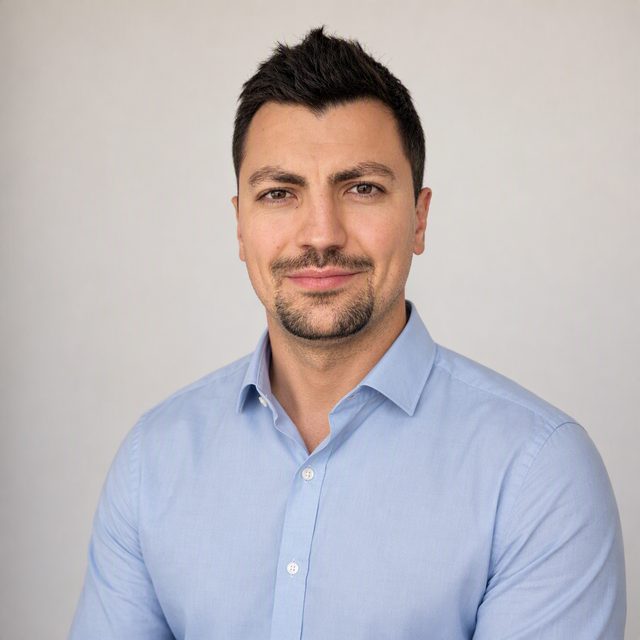
Joshua Ravnjak
Senior Consultant, digital transformation and AI
Founder, CertRamp Learning
921 learners and 61 reviews on Udemy (as of November 3, 2026)
I have more than 12 years of professional experience and work as a senior consultant in an IT management consultancy, focusing on digital transformation, AI and requirements engineering in the insurance industry. I have earned many certifications myself, so I know what exam preparation feels like. That is why every CertRamp practice exam follows the same progression: an easy start to see where you stand, then real exam level, then beyond it. You walk into the exam with a buffer and a good feeling.
Selected certifications
- IREB® CPRE Foundation Level
- ITIL® 4 Foundation
- Professional Scrum Master I (PSM I)
- Professional Scrum Product Owner I (PSPO I)
- Certified SAFe® 6 Scrum Master
- Certified AI-Empowered SAFe® 6 Product Owner/Product Manager
Plus further certifications from Microsoft and Anthropic (Claude).
ITIL® is a registered trademark of PeopleCert. IREB® is a registered trademark of IREB e.V. SAFe® is a registered trademark of Scaled Agile, Inc. PSM and PSPO are trademarks of Scrum.org.
Also in print
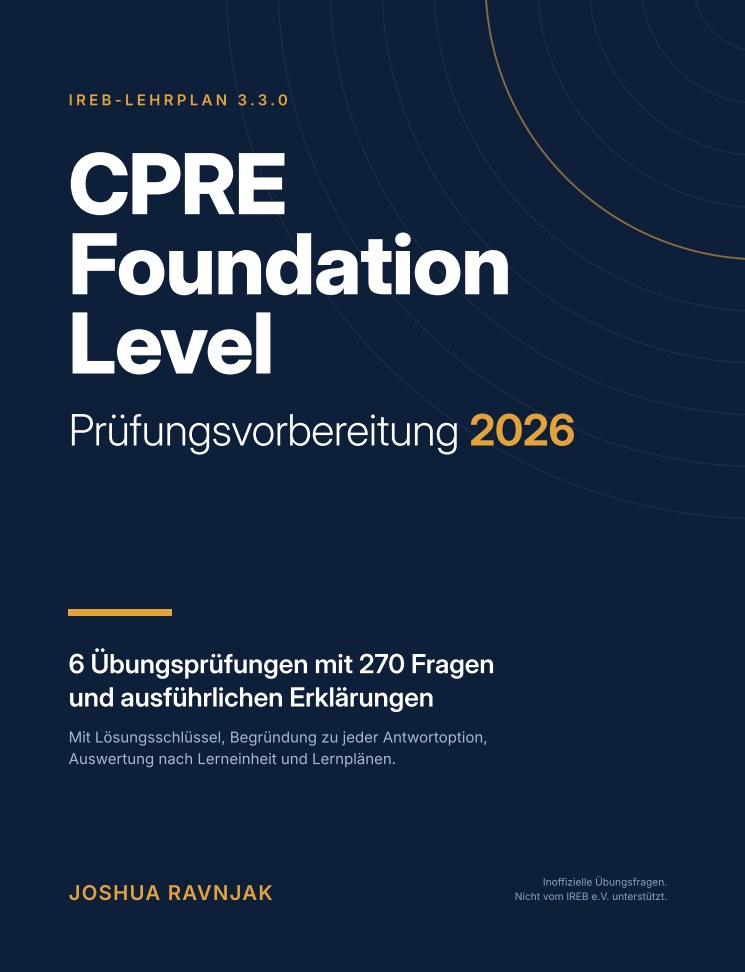
CPRE Foundation Level Prüfungsvorbereitung 2026
6 Übungsprüfungen mit 270 Fragen und ausführlichen Erklärungen
Paperback, German, October 2026
My CPRE Foundation Level exam-prep book (in German) follows the same progressive approach.
View on Amazon (opens in a new tab)